Last Updated on February 12, 2026 by shawnshealth
⚡ Think you know the truth about overeating? These myths are holding you back — here’s what really works.
Overeating Myths Debunked: Smart, Effective Weight & Fat Loss Solutions
ℹ️ Note on Terminology Throughout this article, I use both “weight loss” and “fat loss.” While they’re often used interchangeably, they don’t always mean the same thing. Weight loss can include water, muscle, or fat, whereas fat loss refers specifically to reducing body fat. I include both terms here to match how readers search and to keep the discussion clear and practical.
Overeating myths are everywhere, and if you’ve ever felt discouraged because you’ve “tried everything” to stop overeating — you’re not alone. Most of us have experimented with the usual advice: eat slower, drink water, chew gum, flex your willpower. And yet… the snack drawer still calls our name.
Here’s the honest truth: even if you follow every tip in this article, you’ll still stumble sometimes. That’s normal. The goal isn’t perfection — it’s progress. What matters is learning which strategies actually work for most people most of the time, and which ones are overeating myths that sound good but rarely deliver.
This post takes an honest look at both sides: the old overeating advice that fails and the newer, science-backed strategies to stop overeating that help you break the cycle.
🔥 If losing weight feels like an uphill battle, you’re not alone. Hidden biological roadblocks, mental traps, and industry myths all conspire to make progress harder than it should be. This post cuts through the noise and shows you the real reasons weight loss resists—and how to finally push back.
Featured Snippet: Quick Takeaways
- 🚫 Old tips like “eat slowly” and “chew gum” are overeating myths.
- 🧠 Cue-based eating strategies retrain your brain to recognize real hunger.
- 🏠 Food environment hacks (out of sight, out of mind) reduce temptation.
- 🍳 Protein + fiber first = better satiety, fewer cravings.
- 😴 Sleep alignment lowers hunger hormones and supports weight control.

Table of Contents
📌 Disclosure
⚕️ Medical Disclaimer This content is for information only, not medical advice. Consult a healthcare professional.
🛒 Amazon Disclaimer As an Amazon Associate I earn from qualifying purchases, at no extra cost to you.
Why Overeating Myths Fail for Weight Loss & Fat Loss
Before we get to the good stuff, let’s take a moment to honor the classics — those well-meaning tips that sound wise but flop harder than a pool noodle in a bear fight. You’ve heard them. You’ve probably tried them. Maybe you even swore by them during your “gum instead of snacks” phase.
But let’s be real: if chewing gum could cure cravings, dentists would be running weight loss clinics. These myths have been passed around like diet folklore — and it’s time we gave them a proper send-off.
These aren’t bad ideas — they’re just not heavy lifters. Most of them work a little, but they crumble when used as stand-alone strategies for serious weight loss. Think of them as seasoning, not the main course.
“Eat Slowly”
- Why it fails: Eating slowly doesn’t fix the real issue — external triggers like stress, boredom, or distraction.
- Positive note: Slowing down can still help you notice fullness cues more clearly when paired with other strategies.
“Drink Water Before Meals”
- Why it fails: Water fills your stomach briefly but doesn’t address hunger hormones or emotional eating.
- Positive note: Staying hydrated is always a win — it supports digestion, energy, and overall health.
“Chew Gum Instead of Snacking”
- Why it fails: Gum distracts you for a few minutes, but cravings usually return stronger (and is annoying to anyone within earshot).
- Positive note: Gum can be a handy short-term pause button, giving you a moment to rethink whether you’re truly hungry.
“Just Use Willpower”
- Why it fails: Overeating is driven by environment and biology, not laziness. Willpower alone is a losing battle.
- Positive note: Willpower shines when used as a backup — it’s most effective when supported by smart systems and habits.
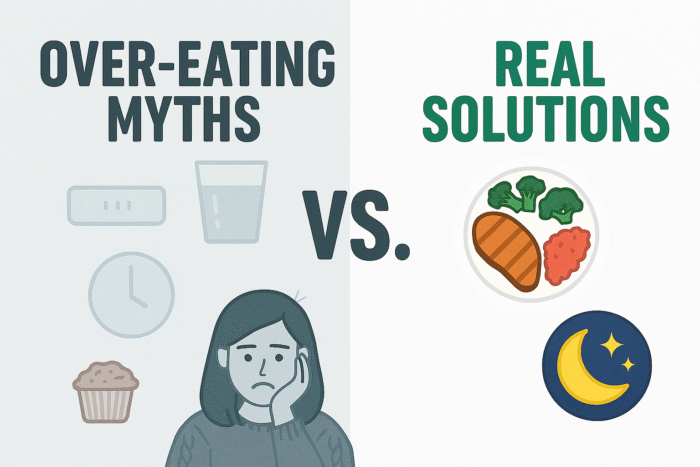
👉 These are the overeating myths debunked — advice that sounds simple but rarely works in the real world.
Science‑Backed Fat Loss Solutions That Work
Cue-Based Eating Strategies
- Retrain your brain to respond to true hunger signals instead of stress or boredom.
- Ask: “Am I hungry, or just triggered?” before eating.
- This is one of the most honest ways to avoid overeating because it tackles the root cause.
Food Environment Hacks
- Store snacks in opaque containers or out of reach.
- Place meals away from the table to avoid “mindless refills.”
- Keep healthy options visible (fruit bowl beats cookie jar).
- These are real-world overeating solutions that work better than willpower alone.
🔥 “Want a workout that burns fat without equipment? Check out my Bodyweight Workout for Weight Loss for simple routines that deliver results.” 💪
Protein + Fiber Front-Loading
- Eat protein and fiber first in a meal.
- This increases satiety and reduces total calorie intake compared to eating carbs first.
- A science-backed strategy to stop overeating that’s simple and effective.
Interrupt the Autopilot
- Insert a pause ritual before eating (deep breaths, short walk).
- Breaks the unconscious cycle of emotional eating.
🌾 Breaking overeating cycles takes consistency — the same principle I highlight in my Farmer Strength Blueprint for building real-world power.
Emotional Replacement Strategies
- Replace food with non-food coping mechanisms: journaling, walking, calling a friend.
- Works better than suppressing cravings.
Sleep and Circadian Alignment
- Short sleep increases ghrelin (hunger hormone) and reduces leptin (satiety hormone).
- Prioritize 7–9 hours of sleep to reduce overeating risk.
- Another unique overeating hack that most people overlook.
😴 Sleep isn’t just about feeling rested — poor sleep can disrupt hunger hormones and drive overeating. I break this down in detail in my post, Can Lack of Sleep Make You Gain Weight?.🍽️
🎥 Want a quick breakdown of practical ways to stop overeating? This short video walks you through simple, science‑backed tips you can start using today.
Comparison Table — Old vs. New Advice
| Old Advice (Myths) | Why It Fails | New Solution | Why It Works |
|---|---|---|---|
| Eat slowly | Doesn’t fix triggers | Cue-based eating strategies | Retrains hunger response |
| Drink water | Temporary fullness | Protein + fiber first | Long-lasting satiety |
| Chew gum | Short distraction | Emotional replacement | Addresses root cause |
| Willpower | Ignores environment | Food environment hacks | Removes temptation |
| Skip sleep | Hormonal imbalance | Sleep alignment | Balances hunger hormones |
✍️ Conclusion: Overeating Myths
Overeating isn’t about laziness or lack of willpower — it’s about triggers, environment, and biology. The old overeating myths may sound good, but they rarely work as effectively as we want. The real solutions? Cue‑based eating strategies, environment hacks, protein/fiber sequencing, emotional replacements, and sleep alignment — science‑backed approaches that help you stop overeating for good.
👉 Remember: even with these strategies, you’ll sometimes slip. That’s human. The win is in catching yourself sooner, bouncing back faster, and building systems that make overeating less likely over time.
💪 For a complete breakdown of how weight loss and fat loss really work, see our Ultimate Guide to Weight Loss and Fat Loss.
❓ Frequently Asked Questions About Overeating
Why doesn’t eating slowly stop overeating?
- Eating slowly helps you notice fullness cues.
- Overeating is usually triggered by stress, boredom, or environment — not speed.
- Works best when combined with cue‑based eating strategies.
Does drinking water before meals reduce overeating?
- Water may create temporary fullness.
- It doesn’t affect hunger hormones or emotional eating.
- Hydration supports digestion and energy but isn’t a stand‑alone fix.
Can chewing gum replace snacking?
- Gum distracts you for a few minutes.
- Cravings often return stronger afterward.
- Useful as a short pause button, not a long‑term solution.
Is willpower enough to stop overeating?
- Overeating is driven by biology and environment, not laziness.
- Willpower alone rarely works.
- Smart systems and habits (cue‑based eating, food environment hacks) make lasting change possible.
Can lack of sleep make you gain weight?
- Poor sleep increases ghrelin (hunger hormone) and lowers leptin (satiety hormone).
- This imbalance makes overeating more likely.
- Prioritizing 7–9 hours of sleep supports appetite control and weight management.
- 😴 See my post: Can Lack of Sleep Make You Gain Weight?
What foods help reduce overeating?
- Protein‑rich foods (eggs, lean meats, legumes) increase satiety.
- Fiber‑rich foods (vegetables, whole grains) slow digestion and reduce cravings.
- Balanced meals with protein + fiber first help control appetite.
Is emotional eating the same as binge eating?
- Emotional eating is triggered by stress, boredom, or feelings.
- Binge eating involves consuming large amounts of food in a short time, often with loss of control.
- Emotional eating can lead to binge episodes, but they are not always the same.
How can I stop overeating at night?
- Nighttime overeating is often linked to poor sleep or skipped meals earlier in the day.
- Eating balanced meals with protein and fiber during the day reduces late‑night cravings.
- Creating a bedtime routine and limiting screen time can help curb nighttime snacking.
📚 Further Reading & References
Cue-Based Eating Research — Center for Healthy Eating and Activity Research (UCSD) explains how “Regulation of Cues” therapy helps people respond to hunger and fullness signals.
Food Environment & Cravings — Harvard Nutrition Source outlines how food availability and marketing shape eating behavior.
Protein & Fiber Satiety — University of Minnesota study shows how combining protein and fiber in whole foods increases satiety and reduces intake.
Sleep & Hunger Hormones — Wisconsin Sleep Cohort Study found short sleep lowers leptin (satiety hormone) and raises ghrelin (hunger hormone), increasing overeating risk.
Behavioral Strategies for Overeating — UCSD Behavioral Weight Loss Program details structured psychological approaches to changing eating habits.
Have I not commanded you? Be strong and courageous. Do not be afraid, and do not be dismayed, for the LORD your God is with you wherever you go. Joshua 1:9