Last Updated on December 6, 2025 by shawnshealth
A Real-Life Guide for People Who’ve Tried Everything
Why is Weight Loss So Hard? (No, Really.)
Why is weight loss so hard? That’s the question we’re tackling—but let’s be clear: most people really mean fat loss. The number on the scale doesn’t tell the whole story. Muscle, water, inflammation, and hormones all play a role.
Still, “weight loss” is the term most people search for—and the one we use in everyday conversation. This guide is about real fat loss progress, not just chasing a number. We’ll meet you where you are, use numbers as markers, and help you move beyond them. Now, let’s get at it. 😊
💪 For the complete roadmap to lasting results, explore our Ultimate Guide to Weight Loss and Fat Loss.

Most plans make it harder. More tracking. More guilt. Less joy. This guide isn’t here to shame you into submission or sell you powdered sadness in a shaker bottle. It’s here to make weight loss easier—because easier is the only thing that actually sticks.
👉 Related: Minimalist Workout Guide – No gym. No gear. No guilt. Just movement that fits your life—even when time, space, or motivation are in short supply.
Reader Roadmap: What You’ll Get From This Guide
- Why weight loss feels impossible—and how to fix it
- A flexible framework that adapts to your life
- Real-life strategies for food, movement, and mindset
- Humor, empathy, and zero shame
👥 Who This Guide Is For
- People who’ve tried every diet and still feel stuck
- Anyone tired of guilt, tracking, and perfectionism
- Folks juggling real-life chaos—work, family, winter moods, van life
- Emotional eaters who want practical, non-judgmental strategies
- Beginners overwhelmed by fitness advice
- Over-40 readers navigating hormonal shifts and joint pain
- Anyone asking: “Why is weight loss so hard—and how do I make it easier?”
If you see yourself in any of these, this guide was written for you.
Bookmark this post, share it with someone who’s tired of the same old advice, and use it as your launchpad for lasting change.
➡️ Want the complete breakdown? Read our Ultimate Weight Loss & Fat Loss Guide.
Disclaimer: This post contains affiliate links. As an Amazon Associate, I earn from qualifying purchases—at no extra cost to you.
This content is for informational purposes only and is not medical advice. Always consult a qualified healthcare provider before making changes to your diet, exercise, or wellness routine.
Table of Contents
🧠 Quick Answers to Real Weight Loss Questions
❓ Why Is Weight Loss So Hard?
- Hunger hormones spike, metabolism slows—your body resists change.
- Emotional eating from stress, boredom, or loneliness sabotages progress.
- Most plans ignore real-life chaos: tough times and, unpredictable schedules.
- It’s not failure—it’s biology plus unrealistic expectations.
❓ What Actually Makes Weight Loss Easier?
- Build habits that work on your worst day, not your best.
- Prioritize protein, sleep, and movement you’ll actually do.
- Ditch guilt and perfection—momentum matters more.
- Use a flexible framework, not a rigid plan.
❓ Can You Lose Weight Without Counting Calories?
- Yes—focus on portion awareness and protein-first meals.
- Track hunger patterns, not just numbers.
- Simplify: eat foods that satisfy and support consistency.
- Optional tracking, not mandatory math.
❓ What’s the Best Workout for Fat Loss?
- The one you’ll stick with: walking, bodyweight, resistance bands.
- Consistency beats intensity.
- Movement should feel doable, not punishing.
- Recovery matters: rest is part of the plan.
Why Is It So Hard to Lose Weight?
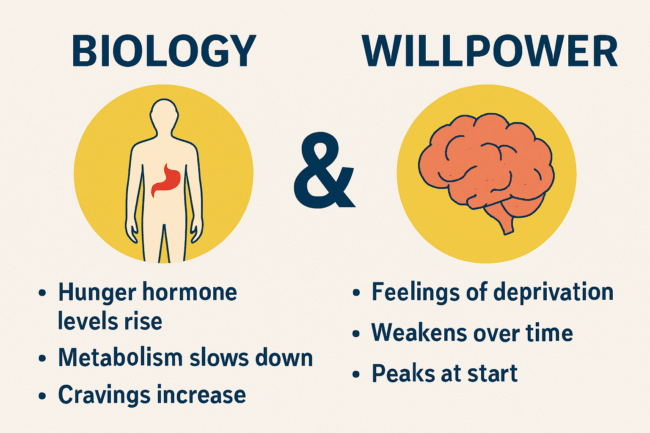
Your body is wired to survive, not to look good in jeans. When you cut calories, your hunger hormones spike. Your metabolism slows down. Your brain starts whispering sweet nothings about donuts.
Then there’s emotional eating. Stress, boredom, loneliness, seasonal depression—these aren’t just feelings. They’re triggers. And most weight loss plans pretend they don’t exist.
And let’s not forget logistics. You’re juggling work, family, travel, the occasional apocalypse , and maybe a dog that eats your protein bars. Real life doesn’t care about your macros.
So again—why is weight loss so hard? Because most plans ignore the actual obstacles. They’re built for ideal conditions, not real ones.
🧠 Struggling with weight loss despite doing everything “right”? This expert-backed guide from Healthline explains how your brain, hormones, and environment can make weight loss harder than it looks—and why it’s not your fault.
What Doesn’t Work (And Why We Keep Trying It)
- Extreme restriction: You lose weight fast—and gain it back faster.
- Overtraining: Your knees rebel. Your motivation ghosts you.
- Perfectionism: One “bad” meal and you spiral into shame.
- Trendy diets: If kale were the answer, we’d all be done by now.
We keep trying these because they’re simple. They promise control. But they ignore the messy, emotional, unpredictable reality of being human.
And they rarely answer the real question: why is weight loss so hard when you’re doing everything “right”?
📉 Why do most weight loss programs fail—even when you follow the rules? This scientific review from Springer breaks down the real reasons: restrictive diets, metabolic backlash, and the emotional toll of chasing perfection. It’s not just you—it’s the system.

🧠 Self Quiz: What’s Actually Making Weight Loss Hard for You?
Before you dive into another plan, take a minute to check in with yourself. These friction points help answer the real question: Why is weight loss so hard?
✅ Check all that apply:
- ☐ I skip meals or eat chaotically throughout the day
- ☐ I sleep less than 6 hours most nights
- ☐ I feel guilty after eating certain foods
- ☐ I’ve tried multiple diets but nothing sticks
- ☐ I eat when I’m stressed, bored, or overwhelmed
- ☐ I don’t have a consistent workout routine
- ☐ I feel like I’m doing everything “right” but not seeing results
- ☐ I don’t know what to eat anymore—everything feels confusing
- ☐ I’m exhausted by the idea of starting over again
- ☐ I want to lose weight, but I also want to enjoy my life
If you checked even one box: You’re not alone—and you’re not broken. These are the exact challenges this guide is built to solve. Let’s make weight loss easier, one real-life solution at a time.
The Easy Weight Loss Framework
This isn’t a plan—it’s a system. One that flexes with your life and builds momentum over time.
- Mindset: Stop chasing motivation. Build habits that work even when you’re tired.
- Nutrition: Prioritize protein. Eat meals that satisfy. Ditch the guilt.
- Movement: Choose workouts you’ll actually do. Walk, stretch, lift, repeat.
- Recovery: Sleep like it matters. Manage stress. Take emotional resets seriously.
🎥 Watch: Why Motivation Is Overrated Inspired by Atomic Habits by James Clear. Motivation fades. Systems stick. This 4-minute video breaks down what actually keeps you going—especially on your worst days. 👇
😴 Struggling with cravings and low energy? Lack of sleep messes with your hunger hormones and makes fat loss harder. Can lack of sleep make you gain weight?
🚐 No gym? No problem. Here’s how to work out in small spaces—even in a van or on a frozen patch of grass. Bodyweight workout for weight loss that actually work!
Mini Case Study: Real Life vs. Ideal Plan
Let’s say it’s winter in the Midwest. You’re juggling work, family, unpredictable weather, and a kitchen that’s more chaos than clean. You’ve got limited time, limited energy, and your workouts are whatever you can squeeze in between laundry piles and slippery sidewalks.
Traditional plans say: “Meal prep, hit the gym, track everything.” Real life says: “Eat warm, protein-rich meals that don’t require fancy prep. Do bodyweight circuits in your living room. Walk when the weather cooperates. Sleep with blackout curtains and thermal layers if needed.”
That’s the difference. Fantasy vs Reality. That’s why your personal framework matters more than any rigid plan.
And why is weight loss so hard for most people—it’s not about discipline, it’s about designing a system that survives real life. When your plan fits your actual schedule, energy, and environment, progress becomes possible.

Build Your Own 30-Day Plan
🧩 Build Your Own fat loss 30-Day Plan
Use this guide as your blueprint—but tweak it to fit your life. Swap workouts, adjust meal timing, or double down on what’s working. The goal isn’t perfection—it’s momentum.
Week 1: Focus on protein and walking daily
Week 2: Add 2 short workouts and improve sleep
Week 3: Track hunger patterns and emotional triggers
Week 4: Refine meals, reduce friction, celebrate wins
🧠 Want a deeper dive into sustainable weight loss? Harvard Health breaks down what actually works—no gimmicks, no crash diets. From Mediterranean meals to mindset shifts, it’s a goldmine of practical advice. 👉 Explore Harvard’s Diet & Weight Loss Guide
Common Mistakes (With Sarcasm and Solutions)
- “I’ll just eat 1,200 calories and be fine.” → Cool, enjoy your rage naps.
Instead: Eat enough to fuel your body and stay sane. - “I’ll work out hardcore every day.” → Until your body throws in the towel.
Instead: Schedule rest like it’s part of the plan. - “I’ll cut carbs.” → And friends. And joy.
Instead: Balance carbs with protein and fiber. - “I’ll wait until Monday.” → Or next Monday. Or the one after that.
Instead: Start small today. Consistency beats the time clock (a little frequently is better than a lot rarely).
These patterns are part of why weight loss keeps feeling impossible—but let’s step back and ask: Why is weight loss so hard? The answer isn’t just calories—it’s chaos, emotion, and biology.
⚠️WARNING!
🚧 WARNING: Don’t Starve Yourself to Success. Cutting calories too hard may feel like a shortcut—but it often triggers binge cycles, slows metabolism, and harms your relationship with food. If you’re tempted to go ultra-low, especially under stress, pause.
A steadier pace—about 0.5 to 1 pound of fat loss per week—is safer and more sustainable. Keep calories high enough to support energy, mood, and muscle. Prioritize protein to preserve lean mass, curb appetite, and stabilize blood sugar. This isn’t about suffering—it’s about building a system that lasts.
🔥 Want to get lean—and stay that way? This post breaks down the habits, mindset, and movement strategies that build lasting results. No extremes. No gimmicks. Just real progress that sticks. 👉 Read: How to Get Lean and Stay Lean—because temporary fixes aren’t the goal.

Real Talk: What Actually Helped Me – the Journey
Let’s be honest—weight loss isn’t just about what to eat or how to move. It’s about the patterns we repeat, the deadlines we set, and the stories we tell ourselves. This section isn’t a checklist. It’s a collection of hard-earned lessons, mindset shifts, and small wins that actually stuck. If you’ve ever felt like you’re starting over for the tenth time, this part’s for you.
Real Talk: The January Trap
Every January, I’d go strict—diet, workouts, tunnel vision. All to look and feel good by summer. Problem? I was trying to cram a year’s worth of progress into five months. Then I’d fall short, get discouraged, regain weight… rinse and repeat.
Think in Increments
Depending on where you’re starting, that six-pack might take three months… or three years. Either way, progress is progress.
- Spring: Your stomach no longer hits the steering wheel.
- Summer: Relatives say “you’re getting too skinny” (translation: they’re jealous).
- Fall: Clothes fit better, maybe even smaller sizes.
- Holidays: You survive with minimal damage.
- Next pool season: You’re not hiding behind a towel.
The goal isn’t speed—it’s staying in the game long enough to win it.
Eating “Perfectly” Backfired
I used to treat clean eating like a moral quest—no sugar, no carbs, no joy. Then I’d crash, binge, and spiral. What finally worked? Prioritizing protein, enjoying real meals, and ditching the guilt. Perfection always led to failure. Progress started when I gave myself permission to mess up—and keep going anyway.
Tracking Without Losing My Mind
I dodged calorie tracking for years—it felt obsessive. Tried protein-only, carb timing, even weekly fasting (made it to lunch on the first day). But once I accepted that a reasonable calorie deficit is the real driver of fat loss, things clicked. I stopped spinning my wheels, found an app that made tracking stupid-easy, and finally got out of my own way. If a tool makes life simpler, it’s already a win.
Movement That Doesn’t Feel Like Punishment
I’ve always loved working out—especially calisthenics and strength training. My challenge? Knowing when to rest. The truth is, managing food intake is far more effective for fat loss than trying to out-train a donut. I spent years as the strong-but-chunky guy, but now I aim for lean and strong—and it’s a better way to live. Lean muscle reshapes your body, boosts metabolism, and makes life easier. You don’t have to love exercise, but strength training a few times a week and walking most days? That’s progress, not punishment.
What I Tell Myself When I Mess Up
I’ve had days where I ate like a raccoon in a dumpster. I used to spiral into guilt. Now I pause, ask “What triggered that?” and move on. One bad day doesn’t erase a week of good ones. It’s a bump, not a failure.
Motivation Is Overrated
I don’t wait for motivation anymore. I build systems that work even when I’m tired, stressed, or just not feeling it. A short walk, a protein shake, a decent night’s sleep—those are my anchors. Motivation shows up when I’m already moving.
Social Situations Don’t Have to Derail Me
Parties, restaurants, family dinners—I used to treat them like cheat days. Now I treat them like normal days with a few adjustments. I eat protein first, skip the guilt, and enjoy the moment. It’s not sabotage—it’s life.
What I Do When Life Gets Messy
Busy week? I focus on protein and walking. Low energy? I stretch and sleep. Emotional chaos? I journal, breathe, and simplify. I don’t throw out the whole plan—I just shift gears. Flexibility is the only reason I’m still in the game.
How I Track Progress Without Losing My Sanity
I used to weigh in weekly—until one “heavy day” wrecked my morale. Now I weigh every morning. It’s not about obsessing over the number—it’s about spotting trends. Daily weigh-ins smooth out the noise, show real progress, and eliminate the drama of random fluctuations. For me, it’s a sanity-saver, not a stressor.
Keep in mind that a tiny bit of hidden extra sodium you ate can cause some water retention that then shows up on the scale. This is not fat! It’s just water. So, give yourself a break, weighing is just a tool that helps keep track of what is happening over time.
My Protein Trick
I aim to eat grams of protein equal to my goal weight. So if I want to weigh 165 pounds, I target 165 grams daily. The trick? I front-load it—making protein the priority early with whey, eggs, yogurt, or chicken. Once I hit my goal, I relax a bit. I still stay within calories (any fitness app can help), but I enjoy foods I like. The hidden benefit: protein crushes appetite. Some days, once I’ve hit my target, I don’t even want more. Other days I do—but I eat less, and staying on track feels easier.
⚠️ Recent studies may indicate that we don’t need as much protein as was thought. Even 80 grams of protein for a 165 lb person has shown to be effective for strength and muscle.
✅ Practical takeaway
- Effective range: Most lifters and athletes can maximize muscle protein synthesis with 0.7–0.8 g per pound of bodyweight.
- Flexibility matters: Higher intakes aren’t harmful, but they aren’t strictly necessary for strength or hypertrophy.
- Focus on distribution: Spreading protein across meals (20–40 g per sitting) is more important than hitting an inflated daily total.
What Success Actually Looks Like
It’s not six-pack abs or perfect macros. It’s waking up with more energy. Feeling less guilt around food. Moving your body because it feels good—not because you “should.”
It’s building a system that works any time of year, in chaos, in van life on the road, in real life. That’s what makes weight loss easier. That’s what makes it sustainable.
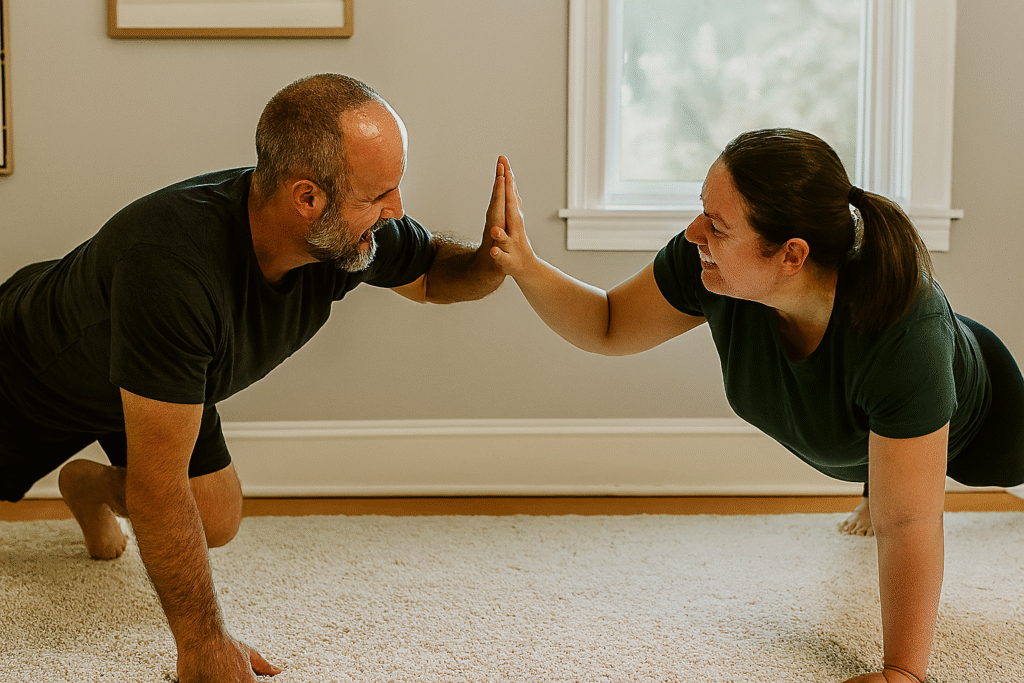
🧭 Getting Started: Your Real-Life Weight Loss Plan
This isn’t a bootcamp. It’s a blueprint for momentum—built for messy schedules, winter moods, and peanut butter emergencies.
🥗 Step 1: Simplify Your Nutrition
Goal: Prioritize protein, reduce friction, and track only if it helps.
- Protein-first meals: Eggs, Greek yogurt, chicken, lentils, cottage cheese.
- Portion awareness: Use your hand—palm for protein, fist for carbs, thumb for fats.
- Easy tracking apps (optional):
- Lose It! – clean interface, barcode scanner
- MacrosFirst – great for protein goals
- Cronometer – deeper nutrient tracking
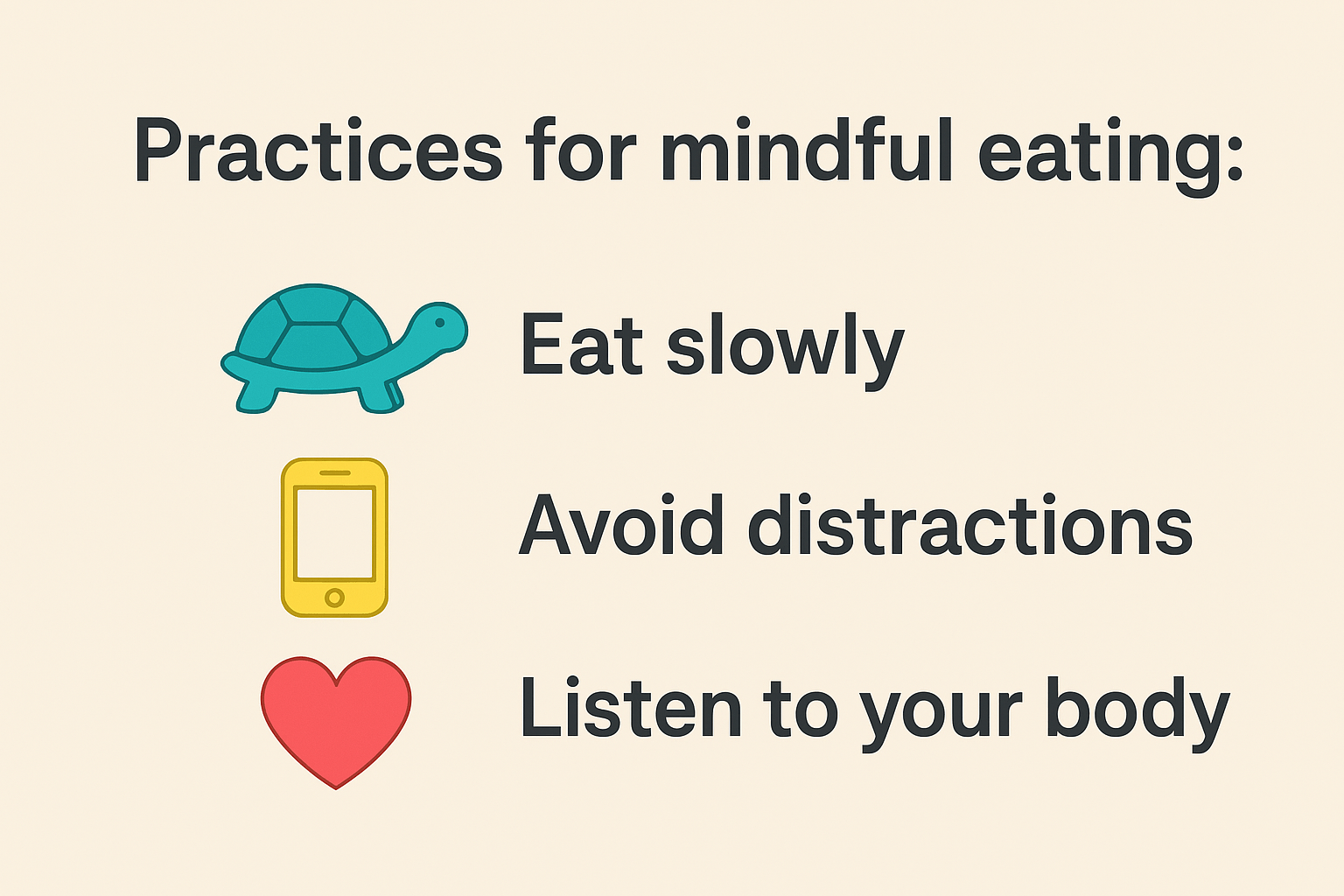
Tip: Don’t track forever. Use it to learn patterns, then shift to mindful eating.
🏃 Step 2: Build a Fitness Plan That Fits Your Life
Goal: Move consistently, not perfectly.
- Start with walking: 10–20 minutes daily. Add music or podcasts.
- Add 2 short workouts/week: Bodyweight circuits, resistance bands, or beginner calisthenics.
- Consider a personal trainer: Look for someone who:
- Respects your pace
- Doesn’t push “no pain, no gain”
- Offers virtual or flexible sessions
Tip: Gradual progress beats heroic burnout. If it feels doable, you’ll keep doing it.
😴 Step 3: Support Your System
Goal: Sleep, stress, and mindset matter more than motivation.
- Sleep 7–9 hours: Use blackout curtains, white noise, or magnesium supplements.
- Track emotional triggers: Stress, boredom, loneliness—note what leads to snacking.
- Use habit stacking: Pair new habits with existing ones (e.g., go for a quick walk after brushing teeth).
🔄 Step 4: Adjust When Life Happens
Goal: Build a system that flexes, not breaks.
- Winter survival mode: Warm meals, indoor movement, vitamin D.
- Busy week? Focus on protein and walking. Skip guilt.
- Missed a day? That’s data, not failure. Adjust and keep going.
🧭 Quick Start Guide: Begin Your Weight Loss Journey
| Step | What to Do | How to Start | Why It Matters |
|---|---|---|---|
| 1. Set a Calorie Target | Estimate maintenance calories | Subtract 250–500 for slow fat loss | Avoids burnout and supports energy |
| 2. Prioritize Protein | Eat 0.7–1g per pound of goal weight | Eggs, yogurt, chicken, lentils, shakes | Preserves muscle and curbs appetite |
| 3. Start Walking | Move daily—10–20 min or 5k–8k steps | Walk after meals, add music or podcasts | Builds momentum and reduces stress |
| 4. Add Strength Training | 2–3 short sessions/week | Bodyweight, resistance bands, calisthenics | Boosts metabolism and reshapes body |
| 5. Track Progress | Monitor weight, hunger, and mood | Use a simple app or journal | Spot trends and adjust early |
| 6. Sleep & Stress | Sleep 7–9 hrs, manage triggers | Blackout curtains, magnesium, habit stacking | Supports recovery and appetite control |
Tip: Don’t try to perfect everything at once. Start with protein and walking. Layer in the rest as momentum builds.

🏋️♂️ Build Your Home Gym Without the Hype
Looking for gear that actually works—without turning your living room into a jungle gym? Check out this highly rated Amazon fitness page for home gym essentials I trust. No gimmicks. Just real tools for real progress.
Affiliate Disclaimer: As an Amazon Associate, I earn from qualifying purchases—at no extra cost to you. Thanks for supporting the site.
📌 Final Tip: Bookmark This Guide
Bookmark this guide and come back anytime you’re asking yourself: Why is weight loss so hard? The answers—and the solutions—are all here.
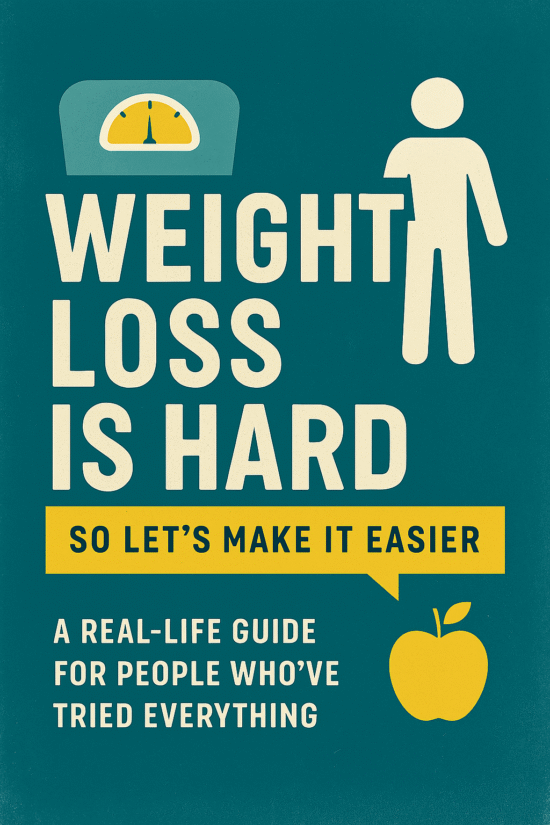
This Post Is Part of the Book
This guide is part of the upcoming book: Weight Loss Is Hard: So Let’s Make It Easier.
It’s built for people who’ve tried everything—and want something that finally fits.
🔗 Related Posts That Support Your Weight Loss Journey
- The Ultimate Guide to Calisthenics For when you want fat-burning workouts without a gym or gear. Timeless strength, mobility, and endurance—just bodyweight.
- Senior Fitness: 15 Essential Principles Joint pain and mobility issues shouldn’t derail your progress. Build strength and resilience at any age.
- Unlock Farmer Strength: The Rugged Blueprint Real-world power that helps you move more, lift more, and stay consistent—especially when life gets messy.
- What Is Strength? 6 Essential Elements Redefine success beyond the scale. Because weight loss is just one part of building true power.
- Easy Weight Loss Strategies: 7 Proven Techniques for Real-Life Results Make weight loss feel doable with hydration, sleep, movement, and mindset tips that actually stick
🧠 FAQ: Why is Weight Loss So Hard
Why Is Weight Loss So Hard for Most People?
Answer: Weight loss is hard because your body fights back. Hunger hormones increase, metabolism slows, and emotional triggers like stress or boredom lead to overeating. Most diets ignore real-life chaos—like busy schedules, winter fatigue, or van life limitations—making success feel impossible.
What’s the Most Effective Way to Lose Weight Without Feeling Miserable?
Answer: Focus on building habits that work on your worst day. Prioritize protein, daily movement, and quality sleep. Skip the guilt and perfectionism—momentum matters more than motivation. Sustainable weight loss starts with systems, not willpower.
Can You Lose Weight Without Counting Calories?
Answer: Yes. You can lose weight by focusing on portion control, protein-first meals, and hunger cues. Tracking is optional. Many people succeed by simplifying their meals and building consistency—not obsessing over numbers.
What Is the Best Workout for Fat Loss at Home or in Small Spaces?
Answer: The best fat-burning workout is the one you’ll actually do. Walking, bodyweight circuits, and resistance bands work anywhere—even in a van or tight apartment. Consistency beats intensity, and recovery is part of the plan.
How Do I Stop Emotional Eating and Late-Night Snacking?
Answer: Start by identifying your triggers—stress, boredom, loneliness. Then build non-food coping strategies like walking, journaling, or calling a friend. Emotional eating isn’t weakness—it’s a signal your system needs support.
Is It Harder to Lose Weight After Age 40?
Answer: Yes, but it’s still possible. Hormonal changes can slow metabolism and increase fat storage. The key is to prioritize protein, sleep, and recovery while adjusting workouts to fit your energy and joint health.
What Foods Help With Weight Loss and Satiety?
Answer: Protein-rich foods like eggs, Greek yogurt, chicken, and legumes help you feel full longer. Add fiber from veggies and whole grains, and healthy fats like avocado or nuts. These support appetite control and metabolic health.
How Much Sleep Do You Need to Lose Weight Effectively?
Answer: Most adults need 7–9 hours of quality sleep. Poor sleep disrupts hunger hormones (ghrelin and leptin), increases cravings, and slows fat loss. Recovery isn’t optional—it’s foundational to sustainable results.
What Are the Biggest Mistakes People Make When Trying to Lose Weight?
Answer:
- Extreme calorie restriction → leads to burnout and bingeing
- Overtraining → causes injury and fatigue
- Perfectionism → triggers guilt and all-or-nothing thinking
- Trendy diets → ignore real-life sustainability Instead, build a flexible system that fits your life.
How Long Does It Take to See Real Weight Loss Results?
Answer: Most people see noticeable changes in 4–6 weeks with consistent habits. Fat loss is gradual—expect 1–2 pounds per week. Focus on energy, sleep, and mood improvements first. The scale is just one metric.
📘 This Guide Is Part of the Book: Weight Loss Is Hard: So Let’s Make It Easier
Because it is hard. Like “why am I Googling low-calorie pizza while eating actual pizza” hard. But easier doesn’t mean boring. It means smarter systems, fewer guilt spirals, and maybe even enjoying the process (gasp). This post is your preview—real strategies, peanut butter honesty, and zero powdered protein sadness. So save it. Share it. And when you’re ready to stop negotiating with your fridge like it’s a hostage situation, come back. We’ll make it easier—and maybe even fun.
For I can do everything through Christ Jesus, who gives me strength. – Philippians 4:13