Last Updated on July 25, 2026 by shawnshealth
Standing Leg Exercises for Seniors: Safe, Simple Moves to Build Strength & Resilience
Standing leg exercises for seniors are one of the safest and most effective ways to build strength, improve balance, and stay mobile as you age. These simple movements can be done right at home without equipment, making them perfect for beginners or anyone looking to stay active.
➤ Introduction: Why Strong Legs Matter More Than Ever
As we get older, strong legs become one of the biggest predictors of independence. They help you:
- stay steady on your feet
- walk confidently
- get up from chairs
- climb stairs
- prevent falls
- stay active without pain
That’s why standing leg exercises for seniors are so important for maintaining strength, balance, and independence.
The good news? You don’t need a gym, fancy equipment, or long workouts. Just a handful of standing leg exercises done consistently can make a huge difference.
This routine is designed specifically for seniors — safe, simple, joint‑friendly, and easy to follow.
➡️ Benefits of Standing Leg Exercises for Seniors
- Better balance
- Stronger quads, hamstrings, and calves
- Improved mobility
- Reduced fall risk
- Easier stair climbing
- More confidence in daily movement
➡️ Safety Tips for Seniors
- Stand near a sturdy support (countertop or heavy chair).
- Move slowly and with control.
- Stop if you feel pain or dizziness.
- Wear supportive, non‑slip shoes.
- Keep your posture tall and steady.
- Use a balance aid if needed.
- Choose a flat, stable surface.
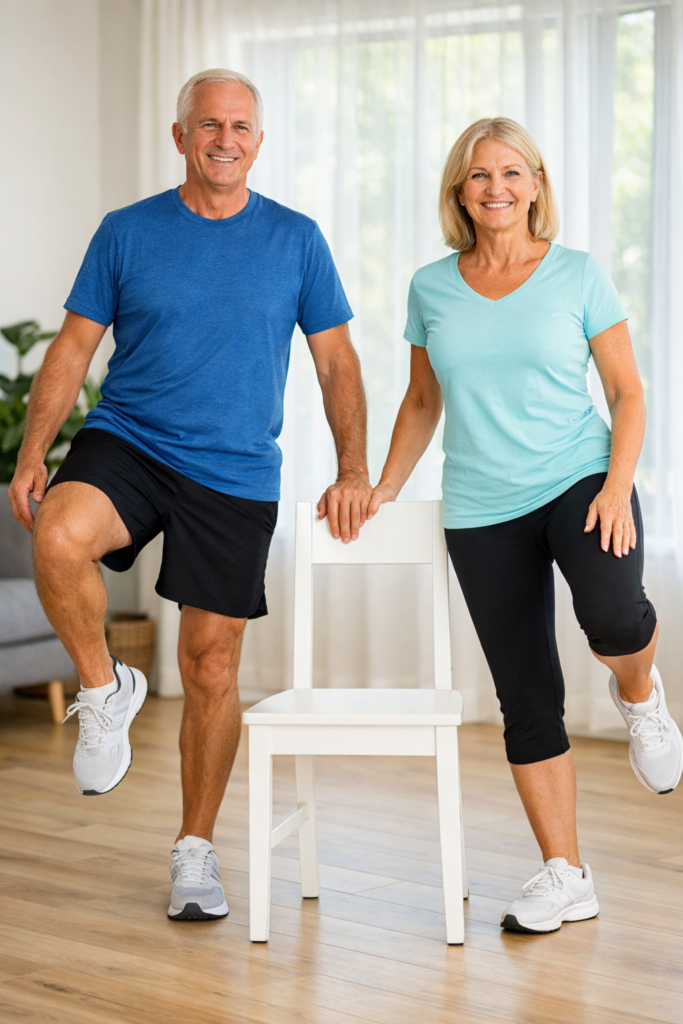
Table of Contents
Medical Disclaimer: This article is for general informational purposes only and is not a substitute for professional medical advice. Always consult your doctor or physical therapist before starting any new exercise routine, especially if you have balance issues, joint pain, or chronic health conditions.
Affiliate Disclosure: This article contains affiliate links, including Amazon Associates links. As an Amazon Associate, I earn from qualifying purchases at no extra cost to you. I only recommend products I genuinely believe can help seniors stay active, safe, and healthy.
➤ Before You Start: Safety First
A few quick reminders:
- Hold onto a sturdy chair, countertop, or wall for balance.
- Move slowly and with control.
- Stop if you feel sharp pain.
- Keep your core gently engaged.
- Breathe naturally — no holding your breath.
➤ The 7 Best Standing Leg Exercises for Seniors
These standing leg exercises for seniors are designed to strengthen the lower body safely and effectively.
These exercises target the major leg muscles: quads, hamstrings, calves, hips, and glutes. They also improve balance, stability, and confidence.
Each movement includes:
- how to do it
- common mistakes
- how to make it easier or harder
- why it helps
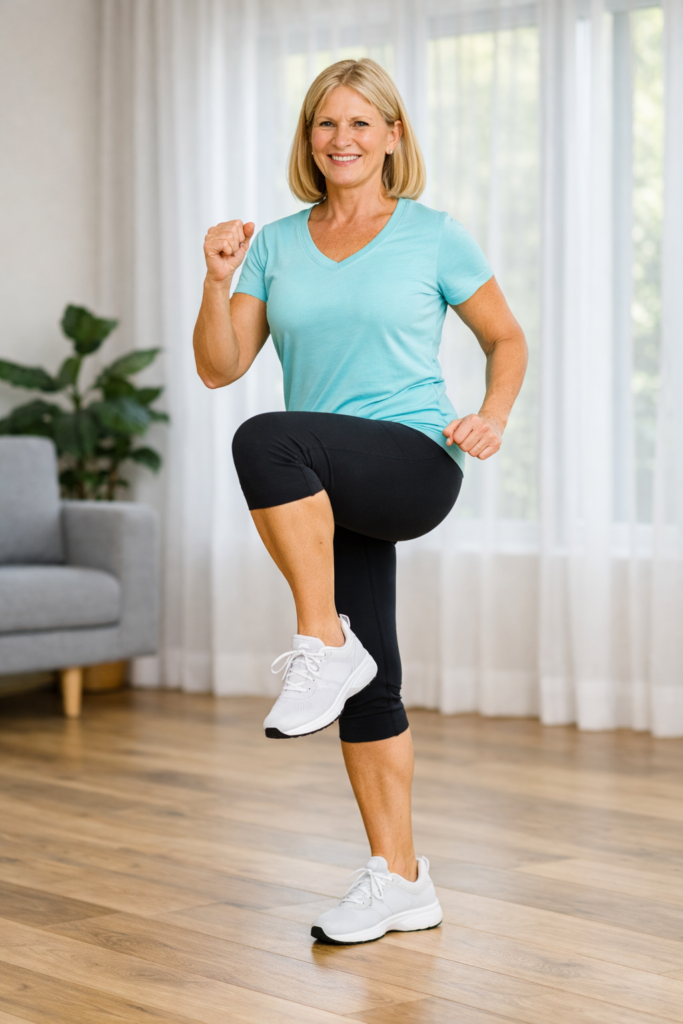
1. Standing Marches
This is one of the safest ways to warm up your legs and improve hip mobility.
How to do it:
- Stand tall behind a sturdy chair.
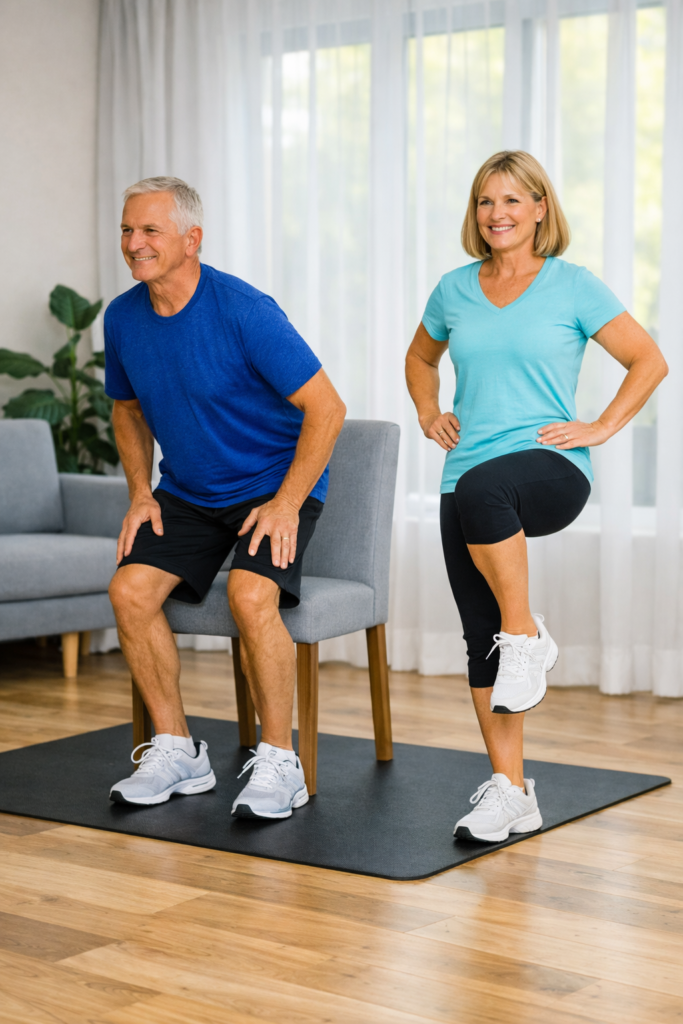
- Lift one knee as if you’re marching.
- Lower it and switch sides.
- Keep your posture tall and your steps smooth.
Reps: 20–30 marches total
Why it helps: Improves hip mobility, warms up the legs, and strengthens the muscles used for walking.
2. Calf Raises
Strong calves help with balance, walking, and climbing stairs.
How to do it:
- Hold the back of a chair.
- Rise up onto your toes.
- Pause for a second.
- Lower slowly.
Reps: 10–15
Make it easier: Keep both hands on the chair. Make it harder: Try single‑leg calf raises.
Why it helps: Calves are essential for stability and fall prevention.
3. Standing Hamstring Curls
This strengthens the back of your legs — key for walking and standing up.
How to do it:
- Hold onto a chair.
- Bend one knee and lift your heel toward your butt.
- Lower slowly.
- Switch legs.
Reps: 10–12 per leg
Why it helps: Supports knee stability and makes everyday movements easier.
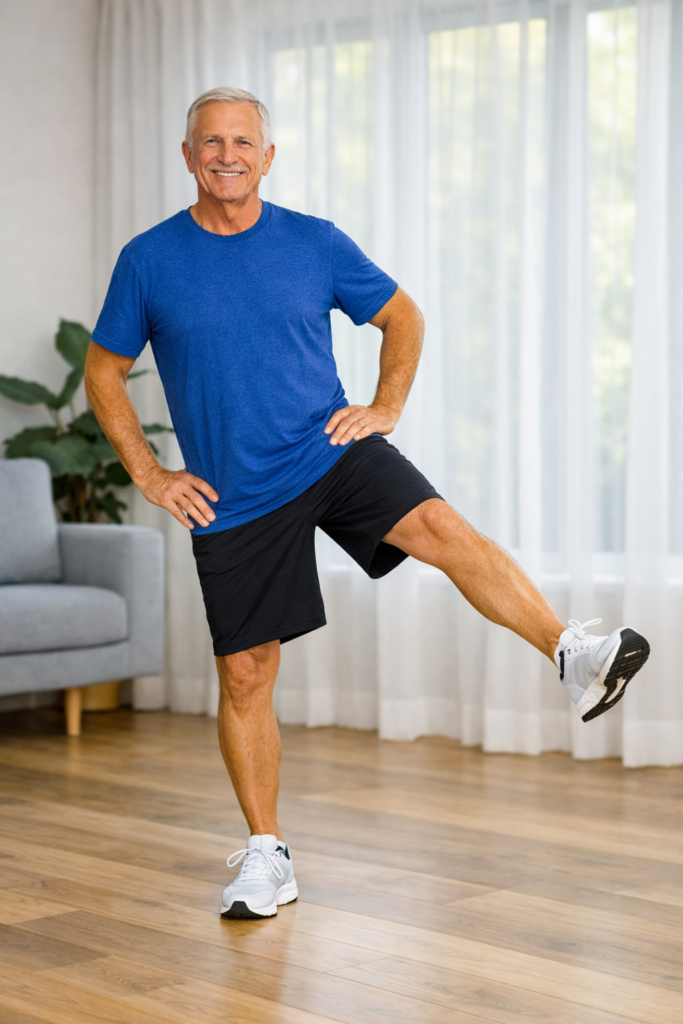
4. Hip Abductions (Side Leg Lifts)
This is one of the best exercises for balance.
How to do it:
- Stand tall with one hand on a chair.
- Lift your leg out to the side.
- Keep your toes pointing forward.
- Lower with control.
Reps: 10–12 per leg
Common mistake: Leaning sideways — keep your torso upright.
Why it helps: Strengthens hip muscles that prevent falls.
5. Hip Extensions (Back Leg Lifts)
Great for strengthening your glutes and improving posture.
How to do it:
- Hold onto a chair.
- Lift one leg straight behind you.
- Keep your knee straight.
- Lower slowly.
Reps: 10–12 per leg
Why it helps: Supports walking power and reduces lower‑back strain.
6. Sit‑to‑Stand (Standing Version)
This is one of the most functional leg exercises for seniors.
How to do it:
- Stand in front of a chair.
- Lower yourself until you lightly touch the seat.
- Stand back up using your legs, not momentum.
- Move slowly.
Reps: 8–10
Make it easier: Use your hands lightly on your thighs. Make it harder: Cross your arms over your chest.
Why it helps: Builds strength for everyday tasks like getting up from chairs.
7. Single‑Leg Balance (With Support)
Balance training is just as important as strength training.
How to do it:
- Hold onto a chair.
- Lift one foot slightly off the ground.
- Hold for 5–10 seconds.
- Switch legs.
Reps: 3–5 per leg
Make it harder: Use just one fingertip for support.
Why it helps: Improves stability and reduces fall risk.
➤ A Simple Standing Leg Routine for Seniors
Here’s a complete routine you can follow 3–4 times per week:
- Standing Marches — 20–30
- Calf Raises — 10–15
- Hamstring Curls — 10–12 per leg
- Hip Abductions — 10–12 per leg
- Hip Extensions — 10–12 per leg
- Sit‑to‑Stand — 8–10
- Single‑Leg Balance — 5–10 seconds per leg
➡️ Tips to Get Better Results
✔️ Move slowly
Fast reps don’t build strength — slow reps do.
✔️ Use a sturdy chair
Safety first.
✔️ Keep your posture tall
Better alignment = better results.
✔️ Don’t hold your breath
Breathing keeps your muscles relaxed and steady.
✔️ Track your progress
Even small improvements matter.
➡️ Common Mistakes to Avoid
- Leaning too far on the chair
- Moving too quickly
- Locking your knees
- Holding your breath
- Skipping balance exercises
➡️ When to Expect Results
Most seniors feel improvements in:
- 2 weeks — better balance
- 4 weeks — stronger legs
- 6–8 weeks — easier walking, standing, and daily movement
Consistency beats intensity.
➡️ How Often Should Seniors Do These Exercises?
How Often Should Seniors Do These Exercises? Most seniors benefit from doing standing leg exercises 2–4 times per week. Even short sessions — 10 to 15 minutes — can improve strength, balance, and mobility. The key is consistency. Start slow, listen to your body, and increase repetitions as your legs get stronger.
👉 See Senior Exercise & Mobility Aids on Amazon A curated selection of low‑impact exercise tools, including pedal exercisers and under‑desk ellipticals for gentle leg strengthening.
➡️ FAQ
Are standing leg exercises safe for seniors?
Yes. When done slowly and with support nearby, standing leg exercises are one of the safest ways for seniors to build strength and improve balance. Using a sturdy chair or countertop helps keep the movements stable and controlled.
How long does it take to see results from standing leg exercises?
Most seniors notice improvements within 2–4 weeks. Balance often improves first, followed by leg strength and confidence with daily movement. Consistency matters more than intensity.
Can seniors do these exercises every day?
Yes. These movements are gentle enough for daily practice, especially when done at a comfortable pace. Seniors can safely repeat them as long as they listen to their body and avoid pushing through sharp pain.
What should seniors do if they feel unsteady during these exercises?
If you feel unsteady, hold onto a sturdy chair, countertop, or wall for support. You can also reduce your range of motion or perform the exercises seated until your balance improves. Safety always comes first.
Can seniors with arthritis do standing leg exercises?
Yes. Most standing leg exercises are joint‑friendly when done slowly and with proper support. If arthritis causes pain, shorten the movement, reduce repetitions, or consult a doctor or physical therapist for personalized modifications.
Do seniors need equipment for these exercises?
No. All exercises in this routine can be done without equipment. A sturdy chair or countertop is helpful for balance, but no weights or machines are required.
➡️ No Time Like the Present
Ready to Get Stronger? Try this routine 2–4 times per week and track how your legs feel over the next month. Small improvements add up fast — and your future self will thank you.
⭐ Related Senior Fitness Guides
Functional Strength for Seniors — 10 daily‑life movements that improve balance and stability
Strength Training for Seniors — 7 powerful ways to stay strong and independent
Advanced Chair Exercises for Seniors — 9 proven moves for aging strong
Chair Stretches for Seniors — 5 simple flexibility boosters to reduce stiffness
Senior Fitness Principles — 15 essential rules for strength, mobility, and healthy aging
⭐ Resources for Safe Senior Strength & Balance
Mayo Clinic – Balance Exercises for Older Adults Trusted medical guidance on simple balance exercises and fall‑prevention strategies.
National Institute on Aging – Exercise & Physical Activity Government‑backed advice on strength, mobility, endurance, and safe daily movement for older adults.
CDC – Older Adult Mobility & Fall Prevention Evidence‑based recommendations for improving stability, preventing falls, and staying active as you age.
➤ Conclusion
Strong legs make everything easier — walking, standing, climbing stairs, staying independent, and feeling confident. These simple standing exercises are safe, effective, and easy to fit into your day.
Start slow, stay consistent, and celebrate every improvement.
These standing leg exercises for seniors are simple enough to do daily and can help you stay strong, steady, and confident as you move through life.
Improving leg strength for seniors can be life‑changing. Stronger legs support better balance, safer movement, fewer falls, and a dramatically higher quality of life — all of which help you stay independent for years to come.